Sports
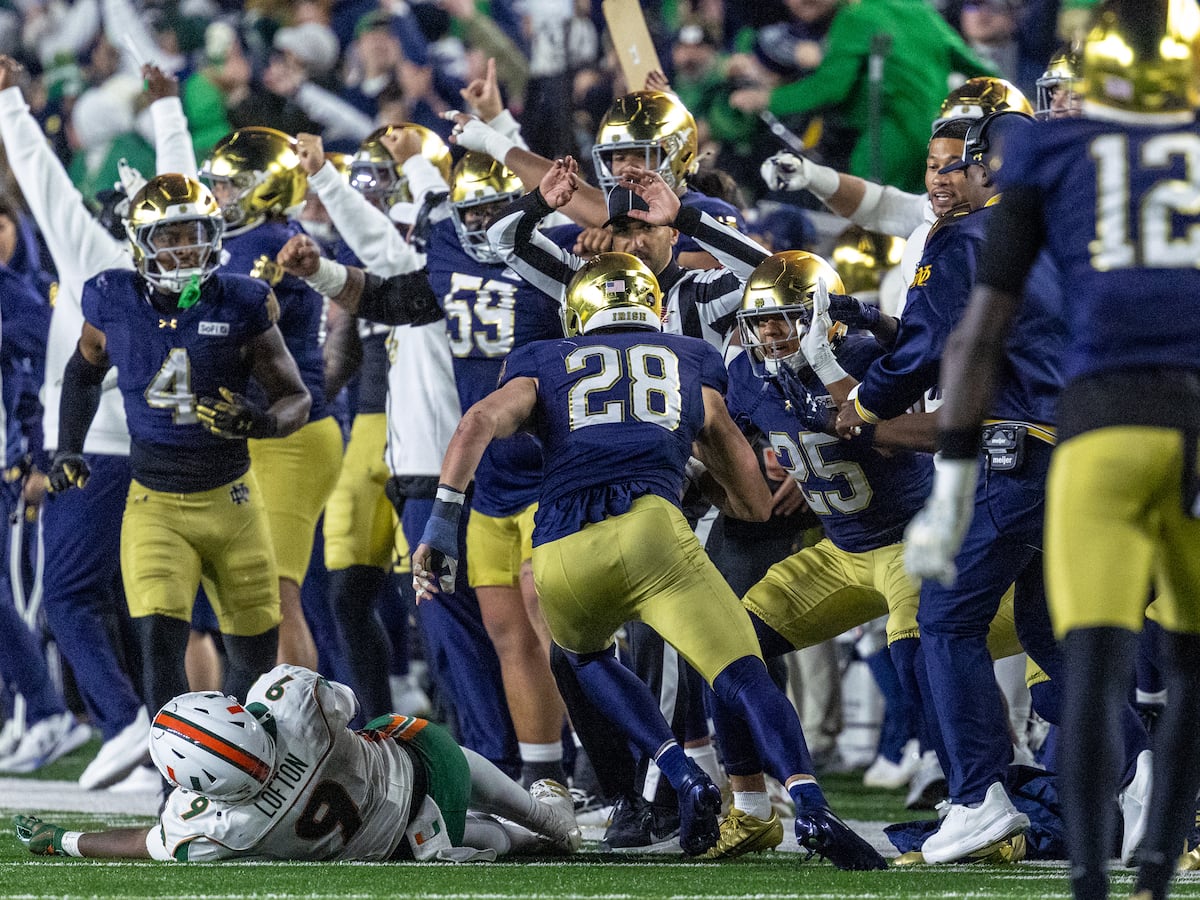
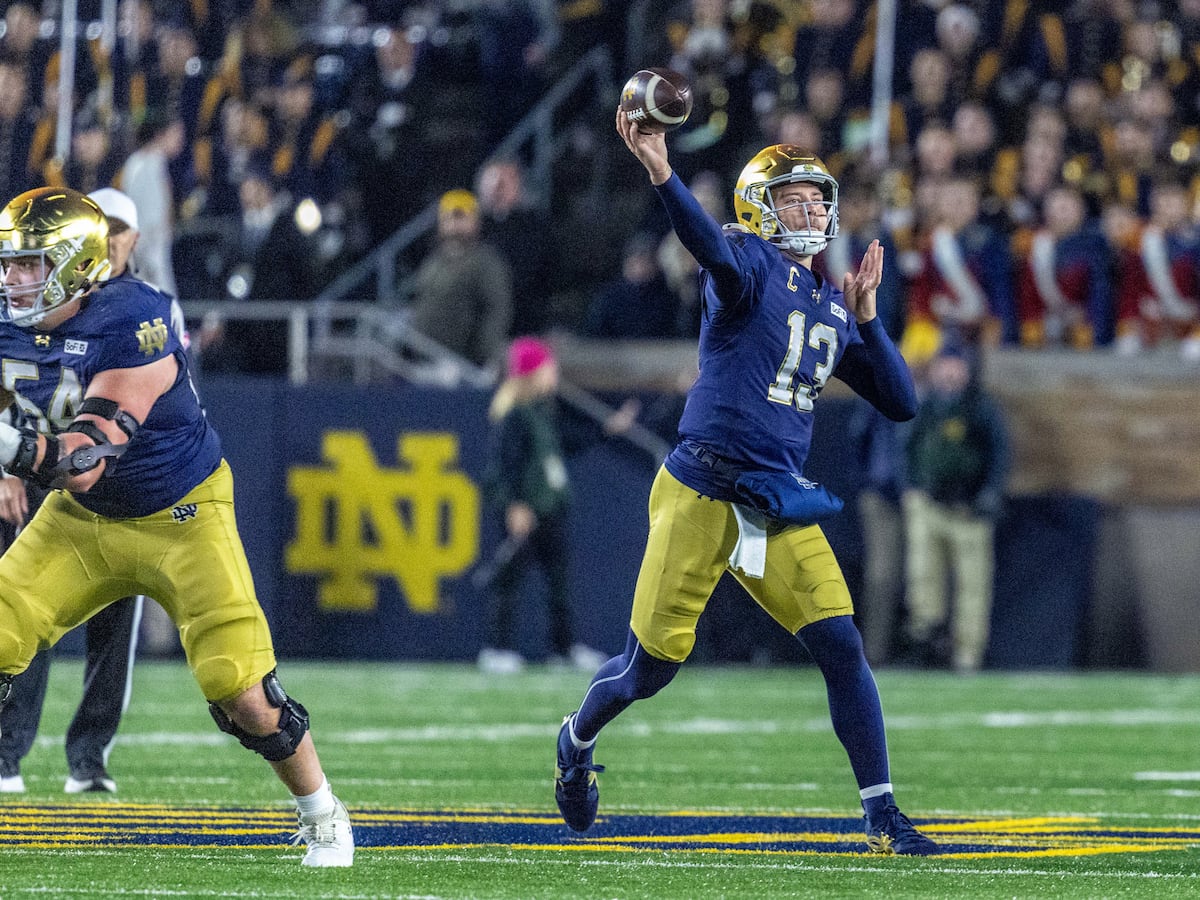
No. 4 Notre Dame takes big lead, then holds off No. 1 Miami 31-24 in a classic
By Marcus Chen
Advertisement · Why this ad?
Katherine oversees editorial operations across all six brands. Before joining The Meridan Group, she spent 14 years at the Minneapolis Star Tribune, where she led the metro desk through its digital transformation. She holds a Master's in Journalism from Northwestern's Medill School.
More from Katherine →
The improbable scenario is within reach: a No. 1 ranked college football team, seizing victory and still facing the sting of an upset. This Saturday night, as the undefeated Miami Hurricanes (8-0, ranked No. 1 in both the Associated Press Top 25 and the College Football Playoff rankings) journey to South Bend to face the Notre Dame Fighting Irish (7-1, ranked No. 11 in the CFP), that unlikely reality could unfold. Notre Dame, favored by more than a touchdown according to most sportsbooks—a margin rarely seen when a top-ranked team is involved—presents a formidable challenge. This situation marks a rare moment, potentially the first in twelve years, where the AP’s top-ranked team enters a game as such a significant underdog. The circumstances highlight the inherent volatility of college football and the pressure that accompanies the pinnacle of the sport.
Being an underdog in any sport signifies more than just a perceived disadvantage; it speaks to a shift in expectations and a potential vulnerability. When a team is ranked No. 1, it carries the weight of that prestige, the pressure to maintain dominance, and the heightened scrutiny that comes with it. To be an underdog, especially by a margin as substantial as a touchdown, suggests that the betting public and analysts alike believe the team has a significant hurdle to overcome. This isn't merely about numbers; it's about the psychology of the game, the confidence of one team and the potential doubts creeping into the minds of the other. The injury to a Miami wide receiver has undoubtedly amplified those doubts, forcing Miami to re-evaluate its offensive strategy and resilience. The perception of vulnerability can impact team morale and performance, potentially creating a self-fulfilling prophecy. For Miami, this game represents a chance to defy expectations and demonstrate the true strength of their program.
The rarity of a No. 1 team being a touchdown underdog underscores the inherent dominance typically associated with that ranking. Historically, teams holding the top spot have consistently demonstrated superior talent and performance, making them overwhelming favorites in most matchups. The fact that Miami finds itself in this position highlights an unusual confluence of factors: Notre Dame's strong home-field advantage, the impact of the injury, and perhaps a perception that Miami’s dominance isn't as unshakeable as their record suggests. This situation provides a fascinating opportunity to examine the dynamics of college football and the ever-present potential for unexpected outcomes. While Miami’s undefeated season has been impressive, the team has faced a relatively manageable schedule, leading some analysts to question the true extent of their dominance. The challenge presented by Notre Dame, a program steeped in tradition and known for its physicality, will provide a crucial test of Miami’s mettle.
The occurrence of an AP No. 1 team being a touchdown underdog in a regular-season game is exceptionally uncommon, a testament to the dominance typically enjoyed by teams holding that coveted ranking. It speaks to the inherent unpredictability of college football, where even the most talented teams can be vulnerable on any given Saturday. The betting line reflects not only Notre Dame’s strength at home—a significant advantage in college football—but also a perceived weakening of Miami’s offense due to the injury. This isn't merely about numbers; it's about the psychology of the game, the confidence of one team and the potential doubts creeping into the minds of the other. Sportsbooks analyze a vast array of data – win probabilities, historical performance, injury reports – to establish these lines, and a touchdown spread signals a considerable disparity in perceived ability. The line also influences betting behavior, potentially impacting revenue for both teams and the broader sports gambling industry.
The last documented instance of an AP No. 1 team being an underdog in a regular-season game by at least seven points is believed to have come in 2014, when Mississippi State faced then-No. 4 Alabama. Mississippi State lost that game, 25-20.
Clemson was ranked No. 1 for the national title game against Alabama on Jan. 11, 2016, but this was a different circumstance—a championship final, not a regular-season matchup. The stakes were significantly higher, and the preparation and intensity were at their peak. Clemson, led by quarterback Deshaun Watson, ultimately triumphed over Alabama in a thrilling overtime victory. The CFP rankings, introduced later, add another layer of complexity to analyzing these historical comparisons. The national championship game represents the culmination of a season’s worth of effort, and the pressure on both teams is immense. Understanding the nuances of these different scenarios is crucial for accurately assessing the significance of Miami’s current underdog status.
Beyond the statistical anomaly, the game carries the weight of a storied and often contentious rivalry: the “Catholics vs. Convicts” matchup. Decades of animosity between teams and fanbases will once again meet for another potentially significant chapter in a high-stakes contest on Saturday. Fans of the No. 1 Miami Hurricanes and No. 4 Notre Dame Fighting Irish are eager to reignite this legendary rivalry, fueled by years of competitive animosity. The bad blood stems from the infamous 1988 showdown between both teams, which was dubbed Catholics vs. Convicts, that ended with the fourth-ranked Fighting Irish upsetting the top-ranked Canes 31-30 and paving the way to a national championship for Notre Dame, and paved the way for years of hatred on both sides. The rivalry only grew
The 1988 game was a watershed moment in college football history. Miami, under the legendary coach Jimmy Johnson, was at the peak of its dominance, boasting a high-powered offense led by quarterback Steve Walsh and wide receiver Ricky Jackson. Notre Dame, struggling to regain its former glory, was considered a significant underdog. However, a combination of Miami’s arrogance and Notre Dame’s determination led to an improbable upset. The game was marred by taunting and trash talk from both sides, further fueling the animosity between the two programs. The image of Miami players making gestures mocking the Notre Dame leprechaun became iconic, solidifying the rivalry’s reputation for bitterness. The loss not only derailed Miami’s national championship aspirations but also served as a painful lesson in humility. The game remains a source of both pride for Notre Dame fans and lingering frustration for Miami supporters, shaping the narrative of the rivalry for decades to come. The cultural clash between the two institutions—Miami’s vibrant, secular culture versus Notre Dame’s traditional Catholic identity—only intensified the rivalry’s intensity.
The rivalry's intensity underscores the high stakes involved in this weekend's game, extending far beyond the pursuit of a win. These sentiments reflect more than just dislike for an opposing team; they represent a clash of cultures and values, a symbolic battle between two distinct identities. The rivalry has been passed down through generations of fans, perpetuating the animosity and making each matchup a must-watch event.
This game arrives at a crucial juncture in the College Football Playoff race. The initial rankings have been released, and teams are now vying for positioning and a shot at the national championship. Miami, currently ranked No. 1 in the CFP, has a relatively straightforward path to maintain that ranking, with upcoming games against unranked Duke, Virginia Tech and Boston College, all at home, ahead of the ACC championship game. The only teams that have started No. 1 in the CFP rankings and won the national championship were Alabama (2020) and Georgia (2021). Meanwhile, Notre Dame is playing for its playoff lives after starting out No. 11 in the CFP rankings. With a win, the Hurricanes very well could keep that No. 1 ranking through the regular season. The only teams that have started No. 1 in the CFP rankings and won the national championship were Alabama (2020) and Georgia (2021).
The injury to Miami wide receiver Malachi Toney is undoubtedly a significant factor influencing the betting line and the overall outlook for the game. Toney is a dynamic playmaker who provides Miami’s offense with a crucial element of speed and explosiveness. His absence will force the Hurricanes to re-evaluate its offensive strategy and rely on other receivers to step up. While Miami has depth at the wide receiver position, replacing Toney's impact will be challenging. Notre Dame’s defense, known for its physicality and discipline, will undoubtedly target the weakened receiving corps. The injury raises questions about Miami’s offensive versatility and its ability to overcome adversity in a high-pressure situation. The team’s coaching staff will need to devise creative strategies to compensate for Toney’s absence and keep the Notre Dame defense guessing. The impact of this injury extends beyond the immediate game, potentially affecting Miami’s overall performance for the remainder of the season.
The game between Miami and Notre Dame represents more than just a contest between two football teams; it’s a clash of traditions, a test of resilience, and a pivotal moment in the College Football Playoff race. As the Hurricanes prepare to face this formidable challenge, the Key Biscayne community, along with fans nationwide, will be watching with bated breath.
By Marcus Chen
By Marcus Chen
By Marcus Chen
By Marcus Chen